Solar for renters and shaded roofs: community solar
Published
Written and fact-checked by the RayValue team · How we research · Sources
On this page
Rooftop panels only work if you own a roof, and the roof has to get sun. Renters, condo owners and homeowners with heavy shade are often left out. Community solar, sometimes called shared solar or subscription solar, is the main alternative: you pay to take part in a larger solar project run by your utility, and your bill reflects your share. This post explains how the main Florida and California programs work and where they fall short. Program terms change, so we point to the program pages for current details.
Key takeaways
- Florida’s big utilities run their own subscription programs. FPL’s SolarTogether is open to renters and owners alike, and Tampa Electric’s Sun Select says it works whether you rent or own.
- These programs are not a way to cut your bill on day one. Tampa Electric says plainly that early on your bill will not go down.
- California’s community solar picture is in transition. The CPUC discontinued most of one program in 2024 and finalized a replacement framework in June 2026.
- California’s best-defined discount, 20%, is for income-qualified customers in disadvantaged communities, not for everyone.
- If you own a sunny roof, rooftop solar and community solar are different products. Compare them using your own numbers.
How a subscription program works
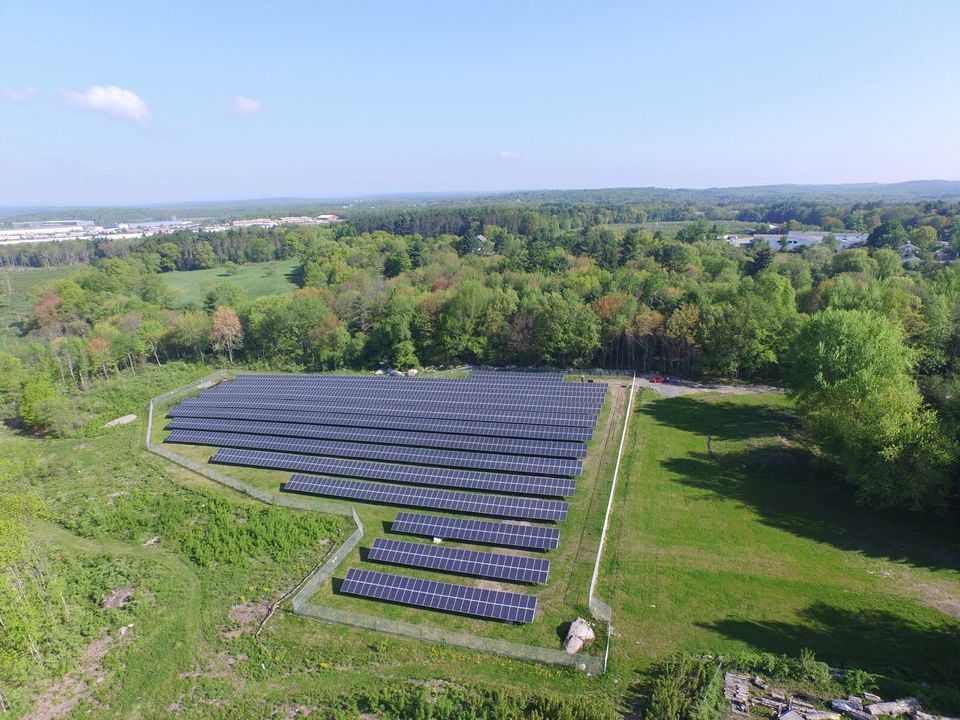
The idea is the same across most programs. A utility or developer builds solar at a central site. You subscribe to a portion of it, and you receive either bill credits or a solar-matched share of your power. You do not install equipment, and the site is not connected to your house. Duke Energy describes its version as delivering the output through renewable energy certificates, where each certificate stands for one megawatt-hour of renewable electricity, rather than through a direct line to the customer.
The price you pay and the credit you get are set by the program, not by how much sun your own roof gets. That is why shade does not matter, and also why it is worth reading the terms: the bill effect depends on the program’s design, not your home.
Florida programs
FPL SolarTogether
FPL says SolarTogether is open to all FPL customers, whether they rent or own and whether the property is a house, apartment, condo or business. Based on the program page:
- You pay a fixed monthly charge that does not change while you are in the program, and you receive bill credits for your share of output from FPL’s solar energy centers. FPL says the credits are expected to exceed the monthly charge over time.
- Subscriptions are sold in 1 kW increments, and you can choose to cover up to 100% of your energy with solar.
- FPL lists no installation costs, long-term contracts or joining fees, and says you can cancel or transfer without penalty. A transfer is only possible if you move within FPL’s service territory.
- Space is limited. If the program is full, you join a waitlist and are enrolled when space opens.
The page we read does not state the dollar amount of the fixed charge or the credit, so we cannot tell you how many months it takes for credits to pass the charge. Look for those figures in your SolarTogether dashboard or the program terms before you commit. For how FPL’s rates affect solar generally, see FPL solar details.
Duke Energy Florida Clean Energy Connection
Duke Energy says residential and business customers in Florida can subscribe to solar and earn bill credits, with no upfront costs, no application fees and no long-term obligation. Subscribers pay a monthly fee, and credits vary and grow the longer a customer stays enrolled. Duke also offers an income-qualified track for customers who receive income-based assistance, designed so that those subscribers save from the start.
Duke’s August 2025 news release said the program was at capacity for large business and governmental customers. It did not give a capacity status for residential customers, so check availability with Duke. The release also quotes dollar amounts for the income-qualified track, but its unit wording is inconsistent, so we do not repeat them here. See Duke Energy Florida solar details.
TECO Sun Select
Tampa Electric’s Sun Select lets residential and small business customers match 25%, 50% or 100% of their electricity use with solar from Tampa Electric’s own arrays. According to Tampa Electric:
- You pay a fixed solar charge of 6.3 cents per kWh on the subscribed portion, and the normal fuel charge, about 2.9 to 3.9 cents per kWh, is waived for that portion.
- Early on, your bill will not decrease. Any savings come from reduced exposure to fuel costs over time and are not guaranteed.
- Tampa Electric’s own example for a 1,000 kWh month is about $1 more per day at 100% solar, or about 50 cents per day at 50%.
- There is no long-term contract and no cancellation fee. If the program is full you can join a waitlist.
- Customers who already have solar panels on their home are not eligible.
As illustrative arithmetic from those same figures: 6.3 cents minus 3.9 cents is 2.4 cents, and 6.3 minus 2.9 is 3.4 cents. Over 1,000 kWh that is roughly $24 to $34 a month extra at 100%, which lines up with Tampa Electric’s “about $1 per day.” Sun Select is closer to a way to buy locally generated solar than a way to save. See TECO solar details and our post on Florida electricity rates in 2026.
California programs
California’s community solar rules were reshaped by CPUC Decision 24-05-065, issued in May 2024 (the CPUC’s CSGT page files it under June 2024). Per the CPUC, it discontinued the Community Solar Green Tariff (CSGT) and Enhanced Community Renewables programs (with legacy CSGT projects continuing), improved the Disadvantaged Communities Green Tariff (DAC-GT) and Green Tariff (GT) programs, and created a new Community Renewable Energy (CRE) program. The CPUC’s June 11, 2026 press release says it then finalized the implementation details for CRE.
DAC-GT: a 20% discount for qualifying households
DAC-GT is for income-qualified residential customers in disadvantaged communities who may be unable to put solar on their roof. The CPUC lists a 20% bill discount, eligibility tied to CARE or FERA, a 233 MW cap, and about 30,000 customers enrolled to date (page read October 2026). Under Assembly Bill 1207, the CPUC’s June 11, 2026 press release says DAC-GT funding shifts to Public Purpose Program surcharges starting July 1, 2026. Whether you qualify depends on both your address and your income, so start with your utility, which is PG&E, SCE or SDG&E in most areas (see PG&E, SCE and SDG&E).
Green Tariff: open to any income level
The Green Tariff is open to customers of any income level, plus commercial customers. Subscribers pay the difference between their current generation rate and the cost of 50 to 100 percent renewable supply, and the CPUC describes it as operating without cross-subsidies from other customers. That wording implies a cost, not a discount, and the CPUC page does not state a discount for the Green Tariff. The statewide cap is 562 MW.
The new Community Renewable Energy program
CRE is built on the CPUC’s existing Renewable Market Adjusting Tariff (ReMAT) pricing, so that non-participating customers pay no more than the avoided wholesale cost of the power. Investor-owned utilities must file implementation and marketing plans for CPUC approval, and community choice aggregators can opt in. In practice that means you may not be able to enroll yet, and offers will vary by where you live. The CPUC page does not state a customer discount.
For context, the CPUC says California has about 1,200 community solar projects totaling 560 MW in operation and about 430 projects totaling 165 MW under construction (June 2026). The CPUC also notes that the U.S. EPA rescinded $249 million in Solar for All grant funding in 2025, which the state and CPUC are challenging in court.
Honest pros and cons
Pros
- Works for renters, condo owners and shaded roofs, with no installation.
- Several programs advertise flexible terms: Tampa Electric states no long-term contract and no cancellation fee, FPL says you can cancel or transfer without penalty, and Duke says there is no long-term obligation.
- Low-income tracks exist in both states: Duke’s income-qualified option and California’s DAC-GT 20% discount.
Cons
- Savings are not guaranteed, and Tampa Electric states the bill will not fall at first.
- Waitlists and capacity limits are common.
- You do not own anything, so there is no home value benefit and no backup power.
- Terms and programs change, as California’s 2024 and 2026 decisions show.
Community solar also does not replace a battery. If outages are your concern, see home batteries in 2026.
Next steps
- Renters and condo owners: ask your utility for the current program terms, the fixed charge, the credit schedule and the waitlist status before enrolling.
- California households that may qualify as income-eligible: check DAC-GT through your utility.
- Homeowners with a usable roof: community solar is not your only option. Run your numbers in the Florida calculator or California calculator, read is solar worth it without the federal tax credit, and get quotes if you want to compare installers. See how we build estimates.
Related reading: solar lease vs buy.
Sources
- FPL: SolarTogether for residential customers
- Tampa Electric: Sun Select
- Tampa Electric: Sun Select FAQs
- Duke Energy: How Duke Energy customers can subscribe to solar and earn bill credits
- Duke Energy news release: Duke Energy Florida offers immediate savings for income-qualified customers (Aug. 27, 2025)
- CPUC: Community solar in California
- CPUC: Solar in Disadvantaged Communities
- CPUC: The Community Solar Green Tariff (CSGT) program
- CPUC press release: CPUC Updates Existing Community Solar Programs (June 11, 2026)